The Hidden Costs of Not Using a CRM: What Small Businesses Need to Know
Published on November 02, 2025
If you’re running a small business without a CRM, it can feel like you’re saving money and keeping things simple. But beneath the surface, all that juggling and patchwork organizing quietly takes a toll—lost hours, dropped leads, and customer details slipping through the cracks. That disorganization adds up fast. Let’s dig into exactly where those hidden costs hide and why making sense of them is the key to truly sustainable growth.
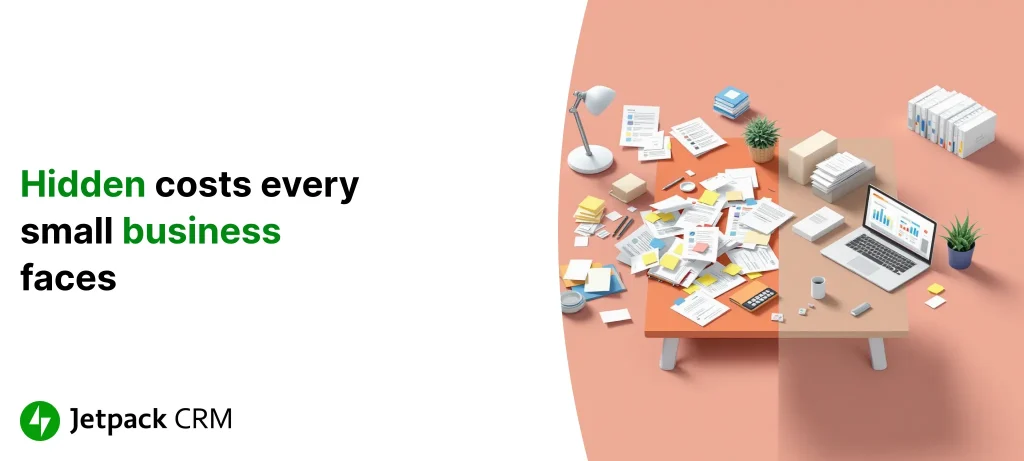
Picture the chaos that comes from not having all your customer info in one place. Instead of one neat view, you’re fielding emails, updating scattered spreadsheets, hunting for sticky notes, and trying to remember which conversation happened where. Without a system in place, details get lost or duplicated, and those simple oversights—missing a follow-up, forgetting a customer’s preferences—start costing you real business. Over time, it’s not just scattered data; it’s missed sales, frustrated customers, and a team stretched thin.
It’s a lot like trying to finish a puzzle when half the pieces are missing. No matter how hard you work, you’ll never see the whole picture—or make the most of every opportunity. This day-to-day scramble hinders your ability to forecast what’s coming or plan your next move. And most business owners only realize how much they’re losing after it’s already gone.
Want more specifics? Take a look at this deep dive on the true cost of disorganized contact management for more examples and advice.
What Missed Opportunities Really Cost
The dollars lost by not using a CRM rarely show up in a single big event—they slip away a little at a time: unreturned calls, forgotten leads, marketing emails sent to the wrong address. And unless you’re tracking every interaction, you’re guessing about your sales, not managing them.
For instance, research shows businesses with a CRM see up to 29% more sales and 34% higher sales team productivity. That’s money in your pocket—money that vanishes if you’re still working from sticky notes and memory.
Consider these numbers:
- Every missed follow-up could be a lost customer for good.
- Without tracking, sales forecasts become wishful thinking, not actionable plans.
- Businesses with organized lead pipelines report a 42% boost in forecasting accuracy.
On average, every dollar put into a CRM can generate $8.71 in return.
It’s not just about new sales either—disorganization impacts everything from marketing effectiveness to long-term relationships. When you don’t really know where your opportunities are, it’s impossible to aim your efforts where they’ll count most.
Why Disorganization Drains Productivity
Trying to manage your customers manually usually means endless data entry, double-checking, and rework. How much time have you spent searching for a phone number you know you wrote down somewhere? Or reconciling which “updated” spreadsheet is actually current?
Unlike automated systems, manual processes breed errors and delays. Every extra step—entering data twice, emailing for clarification, hunting for history—slows your team and builds frustration. But with CRM tools like Jetpack CRM, a lot of that busywork disappears. Tasks that once chewed up hours shrink to minutes with automation.
Look at the difference side by side:
| Method | Time Spent Per Task | Error Rate |
|---|---|---|
| Manual Management | High | High |
| CRM Automated Management | Low | Low |
These hidden inefficiencies not only slow you down—they chip away at customer loyalty and your team’s sanity. When everyone works from the same place within your WordPress dashboard, mistakes drop, follow-ups get done, and your business runs smoother—often more than you realize until you make the change.
Stories from the Field: When DIY Systems Fail
Nearly every small business has a tale of an important lead lost to a misplaced sticky note, or a client frustrated by repeated calls for information they already gave. One business owner described how piecing together customer stories from emails, scattered notes, and memory led to double-booked meetings and unhappy clients—until a CRM brought everything together in one spot.
This isn’t just bad luck. As your client list grows, spreadsheets that once “just worked” can spiral into confusion. Multiple projects overlap, deadlines slip past, and team communication breaks down. In one agency’s case, switching from scattered files to a CRM helped them not only organize better, but also boosted their client retention by 27%, simply because nothing got lost in the shuffle.
“Once we put everything in a CRM, we didn’t realize how much we’d been missing—until the problems stopped happening.” – Small agency owner
These aren’t rare exceptions. The pattern repeats: businesses who wait to organize until they’re desperate, end up spending more time and money fixing problems that a CRM could have prevented in the first place. Want to see more? Check out these case studies of businesses that learned this the hard way.
How a CRM Gives You Back Control (and Time)
Bringing a CRM into your workflow isn’t just a nice upgrade—it’s a shift from constantly putting out fires to genuinely building your business. Here’s what changes when you have real customer insight all in one place:
- Less Drudgery: Automation takes care of repetitive tasks—so you and your team spend more time actually serving customers, not wrestling with spreadsheets.
- Confident Planning: Clear records and reporting help you project sales accurately, budget better, and make decisions with eyes wide open.
- Customers Remember You (For Good Reasons): Tracking every interaction means no more dropped balls, which pays off directly in retention and word-of-mouth.
Another plus: tools like Jetpack CRM are designed to grow with you. Whether you’re running solo or scaling up, your processes can evolve—no need to start over when you outgrow your old setup. If you’re unsure how to pick the right fit, here are some tips on choosing a CRM that matches your next chapter.
A CRM doesn’t just keep things tidy—it transforms a messy, manual process into a repeatable, reliable system you can build on.
When to Make the Switch—and Why It’s Worth It
It’s tempting to ask, “Can I afford a CRM?” But a better question is, “How much longer can I afford the constant patchwork?” The truth is, every missed lead, every delayed response, and every hour spent tracking down info costs far more than most realize. Lost revenue, longer sales cycles, and frustrated customers aren’t always obvious with scattered tools—but they’re real.
The math is clear: investing in a CRM system costs less in the long run than letting inefficiency drain your business year after year. Over time, the organizations that centralize and automate reap not just more sales—but happier teams, more loyal customers, and business growth that feels a lot less like an uphill battle.
If you want to read more about what it takes to switch—and what to expect in those first months—this guide on implementation best practices is packed with honest insights from real business owners.
Bringing all your customer info into one place isn’t about adding overhead—it’s about unlocking potential. You’ll stop plugging leaks and start building for the future, with tools that keep pace as you grow.

 airline