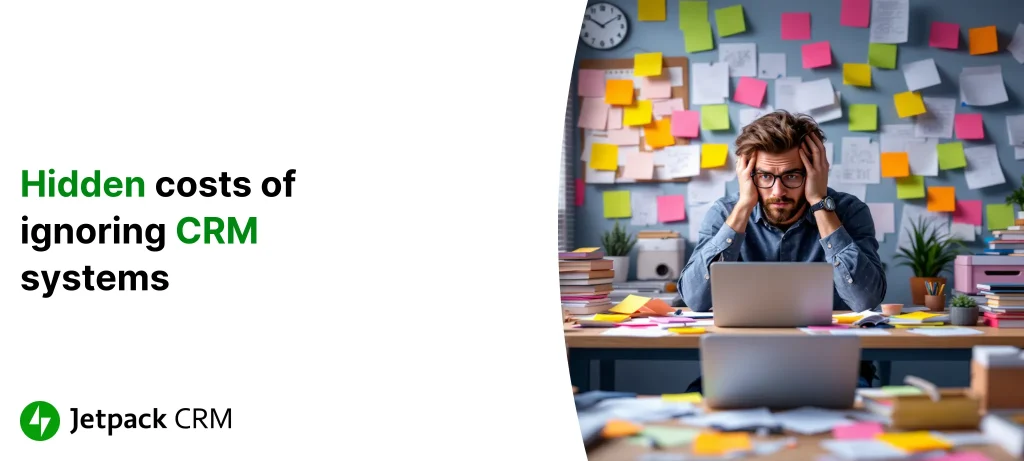
The Hidden Costs of Not Using a CRM: Missed Opportunities and Revenue Loss
Published on February 01, 2026
Have you ever felt like customer data keeps slipping through the cracks, no matter how hard you try to keep things organized? Running a business — especially a small one — without a dedicated CRM can feel exactly like searching for missing pieces of a puzzle that was never all in one box. The results? Missed sales, lots of frustrating double-work, and customers drifting away because nobody remembered to follow up at the right time.
Here’s a reality check for every WordPress site owner or solopreneur: Nearly 80% of leads evaporate, simply because of poor follow-up. What’s even tougher to swallow? Most sales pros spend less than a third of their day actually selling — the rest is buried in admin chaos, jumping among spreadsheets and inboxes.
That kind of disarray quietly chips away at your bottom line. If your contacts live in three different apps and no one remembers who spoke to which customer, you’re guaranteeing confusion, lost revenue, and a patchwork customer experience that leaves everyone dissatisfied. So let’s be clear: getting a CRM isn’t splurging on a nice-to-have feature. It’s survival for anyone serious about growing — or even maintaining — their business.
- Leads falling through the cracks without proper tracking
- Wasted hours on repetitive admin jobs instead of real selling
- Clunky data management that subtly drains your momentum
If you want a closer look at exactly how all these losses pile up, this deep dive in the Jetpack CRM blog breaks it all down.
How a CRM Brings Calm to the Chaos
Think of your CRM as your central command center. Instead of hunting through old emails, sticky notes, and app notifications, you get every customer detail in one tidy dashboard within WordPress. That single change can make all the difference when you’re juggling dozens of conversations and potential deals.
Without a CRM, sales teams are drowning in routine chores: updating spreadsheets, pinging random reminders, digging up old histories. No surprise that only about 28% of their day is left for actual selling. A good CRM quietly takes over all that tedious admin — so every follow-up, every call, and every lead is right where you need it, and nothing slips away unnoticed.
But it’s not just about speed. When your contacts are organized and segmented, it’s suddenly easy to send more personal emails and offers. That’s a big deal: businesses with decent CRM systems see customer retention jump by over 25%. In short: organized data = happier customers = more repeat sales.
| Efficiency Metric | Without CRM | With CRM |
|---|---|---|
| Sales Time | 28% | More time spent selling, less time lost to admin |
| Customer Retention Rates | Hit or miss | Improved by up to 27% |
Every minute wasted on manual data entry is a minute you’re not building relationships or closing deals.
Where Are You Losing Sales Without a CRM?
Let’s be honest: keeping tabs on every lead is almost impossible with scattered notes and email chains. Miss one callback, and there goes another chance at a new customer. About 80% of leads die on the vine because businesses can’t keep up — not because there’s a lack of interest, but because they lose track.
I’ve seen plenty of small business owners try (and fail) to run things on memory and sticky notes. It’s a recipe for missed meetings, forgotten follow-ups, and lost deals. Beyond the sales impact, working this way slowly wears you down. When you’re always reacting, never feeling in control, work gets exhausting.
The pattern is predictable: one forgotten follow-up leads to several missed opportunities. Research shows there’s a persistent 32% gap in follow-up quality for teams without a CRM. That adds up, fast.
- Manual systems make it easy to lose track of who needs a call or email
- No unified history means poor handoffs and repeated mistakes
- Every missed note or late reply chips away at hard-won trust
If your follow-up process feels like a mess, this article offers practical ideas for tightening things up.
The Domino Effect: How Small Mistakes Turn Into Big Losses
Think of missed follow-ups as the first domino in a chain reaction. One gets away — then another, then another. Soon you’re staring at a month of disappointing sales and customers who barely remember you.
It goes like this: A potential customer calls, but you forget to send a proposal. An email gets buried, and you reply a week too late. Each small slip turns into actual money left on the table. Over time, these add up to more than just a hit to your revenue; it’s a drag on your team’s confidence and your business’s reputation.
| Stage | Issue | Impact |
|---|---|---|
| Lead Capture | Disorganized Data | 80% potential leads lost |
| Follow-Up | Manual Tracking | 32% ignored or forgotten |
| Conversion | No Personalization | Missed repeat business |
One missed email may not sink your business, but ten or twenty over the months can quietly eat away at your growth.
Taming the Mayhem with Jetpack CRM
So what changes when you finally centralize your customer management in a system like Jetpack CRM? For starters, it’s a relief not to search a dozen places for one customer’s info. Every call, every note, every sale — all right there in one dashboard.
Here’s what usually gets better:
- Follow-up reminders just happen, so nobody’s left waiting
- Sales teams spend less time on paperwork, more time actually selling
- No more miscommunication between team members (goodbye, “I thought you emailed them!”)
The numbers back this up: businesses that move to a CRM often see fewer lost opportunities and more consistent repeat sales. With the system picking up the admin slack, it’s easier to keep customers happy — and keep them coming back.
Curious what this looks like in action? This helpful post covers specifics and case studies.
Lessons From Small Businesses Who Made the Switch
If you’re wondering if investing in a CRM is really worth it, look at how real-world teams made the leap. One local shop was barely keeping pace with customer emails. Once they set up their CRM, tracking became second nature, and sales suddenly felt a lot less random. Follow-ups got done — and so did more deals.
Another online store struggled to keep customers engaged. After getting organized with their CRM, their retention numbers shot up over 25%. The secret? Better data meant more relevant offers and fewer missed connections. Every time automation took a repetitive task off their plates, staff could actually focus on making real connections instead of busywork.
What these stories make clear is that streamlined data and process isn’t just a “nice to have” — it’s now the cost of doing business. Want more inspiration? Browse these success stories to see exactly how small companies turned chaos into growth.
Getting your data organized is the foundation for locking in more sales and happier customers — no spreadsheet-required.
What to Focus on Next — And Why It Matters
Skipping a CRM to “save money” usually ends up costing more in the long run: lost leads, wasted hours, and missed growth. Switching to a tool like Jetpack CRM pays off by automating follow-ups, capturing every detail, and keeping your customer relationships on track, all within your WordPress site.
Think about it: with 80% of potential sales getting away due to poor tracking, and a third of valuable business time wasted on inefficient processes, a CRM isn’t a luxury. It’s your best defense against silent business-killers and burnout.
Set aside time to audit your own process. Where are the cracks? Which manual tasks drive you crazy? Once you know, map those bottlenecks back to CRM features that can help. Review case studies and fresh industry research — you might be surprised how quickly other WordPress site owners have turned things around by making this one change.
Investing in the right tools isn’t just an upgrade — it’s your bet on a future where your business works for you, not the other way around.
Not sure where to start? This guide covers how to pick the right CRM for your needs. Don’t wait until the small mistakes add up to something bigger — take control of your customer relationships today.

 airline