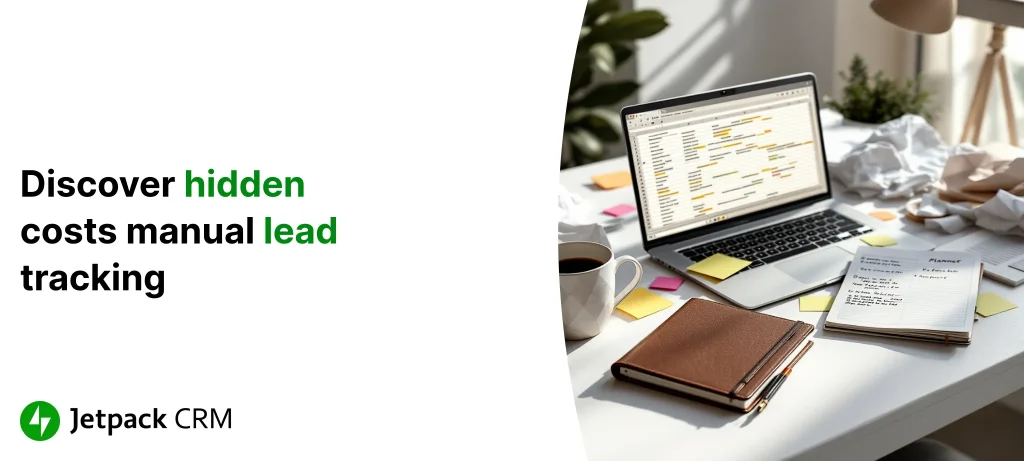
The Hidden Costs of Manual Lead Tracking: Why Solopreneurs Need a CRM
Published on December 08, 2025
If you’re like most solopreneurs, juggling new leads can feel like herding cats — one spreadsheet here, a sticky note there, a half-remembered promise buried somewhere in your inbox. At first, it’s manageable. But soon “cost-effective” turns into “chaos.”
Disorganization isn’t just about a cluttered desk. It’s what happens when a promising lead vanishes because you missed their email, or when that sticky note falls behind your monitor and a client goes cold. According to recent studies, up to 79% of leads never convert — not because they weren’t interested, but because they got lost in a broken follow-up process. That’s not just a missed chance; it’s real money left on the table.
When you’re pulled in twenty directions at once, every extra minute spent hunting for contact details or playing calendar Tetris is a minute stolen from building your business or delighting your customers.
- Disorganization makes it impossible to follow up consistently.
- Key details slip through the cracks.
- Your customer experience takes the hit.
It’s not just about neat contact lists — it’s about building momentum in your sales process, so leads don’t get lost in the shuffle. If your current system leaves you scrambling, this piece on the hidden costs of neglecting a CRM is worth a read.
The Real Cost: Wasted Time, Lost Sales, and What Slips Through the Cracks
Switching to a better system isn’t just about saving headaches. Let’s talk numbers. Manual lead tracking can quietly drain your business resources without you noticing, both in time and in lost revenue. Just five missed leads a month? That can mean $1,000–$3,000 leaving your business — every single month.
- Time Sink: Entering data by hand, chasing emails, trying to remember who needs a follow-up — it all adds up.
- Financial Drag: Even one or two missed leads can snowball into a big dent in your year-end numbers.
- Missed Chances: Without a clear view of your sales pipeline, you’re likely to overlook hot leads. Research shows responding to a lead within 5 minutes makes them 21 times more likely to convert than if you wait just half an hour.
For more detail on why speed and organization matter, this article breaks down the risks of falling behind. Every minute spent manually sifting through leads is a minute you can’t get back — and sometimes, neither can that customer.
What Happens When Manual Methods Take Over: Sarah’s Story
Sarah runs a small business and, like many of us, started off using spreadsheets and handwritten notes. It worked for a while. But as her email list grew and new opportunities started pouring in, she couldn’t keep up. Lost leads, slow responses, and mounting frustration followed — along with revenue she watched slip away.
Looking back, she realized:
- Leads went cold: Delayed or missed follow-ups meant her conversion rate never reached its potential.
- She was burning out: Extra hours each week just to keep up with repetitive admin left little time for business-building work.
- No visibility: Her pipeline was a black box, so she was guessing who to contact next and missing big opportunities.
The turning point? Moving her leads into a CRM system. Suddenly, her workload was manageable, her follow-ups were timely, and she could finally see where every opportunity stood.
“Without a system, even your best lead can disappear before you realize it’s gone.”
How CRMs Turn Chaos Into Clarity
Bringing a CRM into your workflow isn’t just about getting organized — it gives you back control over your business. With everything in one dashboard, you’re no longer searching across apps or sticky notes to find the information you need.
- Everything in One Place: All leads, conversations, and deal progress live in your CRM, not scattered across devices.
- Tasks on Autopilot: CRMs like Jetpack CRM let you automate routine follow-ups, reminders, and data entry, which can save you 70–80% of the manual work.
- See Your Pipeline: Instead of flying blind, you get a clear snapshot of where each deal stands and what needs attention today.
- Never Miss a Follow-Up: Timely, reliable responses become the norm, not the exception.
Ready to dig deeper? This practical guide covers how CRMs help solopreneurs streamline contacts and scale up. When you spend less time piecing things together, you have more space for growing your business — and maybe even a little breathing room.
The Power of Automation: Why It Matters For Your Bottom Line
If there’s a single feature that changes the game for solo business owners, it’s automation. With automation in your CRM, none of your leads get lost in limbo, and those “I’ll email them back later” moments are handled for you.
Let’s compare:
| Manual Process | Automated Process |
|---|---|
| Re-entering the same contact info in six different places | Type it once, your CRM handles the rest |
| Scrambling to follow up days later | Instant personalized emails triggered by lead activity |
| Typos, missed steps, forgotten tasks | Consistent, on-time follow-ups — every time |
Instead of stressing over what’s fallen through the cracks, let automation take care of the repetitive stuff. Research consistently shows: the sooner you respond, the more likely you are to win the sale. Automation makes that possible, even when you’re busy with other work.
To see how features like Jetpack CRM’s bulk tools and lead generation forms can bring automation to your workflow, take a look at this feature update.
CRM Benefits that Compound Over Time
Adopting a CRM doesn’t just tidy up today’s to-do list — it sets your business up for long-term growth. Over time, your CRM becomes the place you turn for insights, reminders, and relationship history. That’s what turns one-time buyers into loyal fans.
- Grow Without Growing Pains: As your list of leads and clients gets longer, your CRM keeps managing it without skipping a beat.
- Sharper Decisions: With all your data organized and current, you can see patterns, spot your best customers, and make more confident business moves.
- Better Relationships: Consistent, timely replies build trust — the secret sauce to customer loyalty and higher-value sales.
- More Time For What Matters: Let automation handle admin, while you focus on growth.
Here’s a stat worth remembering: 78% of customers go with the first business that gets back to them. This article shows how proper contact management can build trust and keep clients around — not just today, but for the long haul.
The bottom line: a CRM does more than catch dropped leads. It builds a stronger, more profitable foundation for your business.
Picking the Right CRM Features — and What to Skip
Shopping for a CRM can feel overwhelming, especially with endless options promising the world. For solo businesses, focus on features that make a real difference without overcomplicating your day-to-day.
- Easy To Use: If you need a manual to get started, keep looking. Your CRM should feel like second nature.
- Smart Automation: Prioritize automation that handles repetitive tasks, so you’re freed up to connect and close.
- Customizable To You: Whether it’s dashboards, reports, or reminders, your CRM should adapt to your workflow, not the other way around.
- Scales As You Grow: Make sure it can handle more deals and contacts as your business expands, without lag or limits.
For a clear-eyed approach to picking the right platform, this selection guide covers what to weigh — and what to ignore. The right CRM will quickly feel like an indispensable teammate in your business.
Make Your CRM Transition Painless: A Few Pro Tips
Switching systems is always a little daunting (yes, even for techies). But a little planning goes a long way toward making integration smooth, not stressful.
- Start with Your Frustrations: Get specific about what’s not working in your current setup. These pain points should guide your CRM must-haves.
- Prep Your Data: Before you migrate, take time to weed out duplicates and outdated info. Clean data in, clean data out.
- Block Out Training Time: Carve out an afternoon to get to know your new CRM. A little learning upfront pays off with fewer hiccups.
- Break It Into Steps: Tackle the transition in small chunks and celebrate when things click into place.
Think of CRM integration not just as a software upgrade, but a way to reclaim your time (potentially up to 80%) and invest in what actually moves your business forward.
For practical tips, don’t miss the Jetpack CRM archives — there’s plenty there on getting started and smoothing out bumps along the way.
Speed is Your Secret Weapon: Responding First Wins Clients
Here’s the deal: If you’re slow to respond, your competitor is one click away. In the digital marketplace, “getting back later” might as well mean “not getting back at all.”
Every minute matters — research shows that following up within five minutes can make you 21 times more likely to turn a curious visitor into a paying client than if you wait just half an hour. And with 78% of buyers choosing the company that gets back first, short response times aren’t just good service — they’re a decisive advantage.
Take the solo business owner who switched to a CRM: automating their initial response didn’t just take the pressure off — it doubled conversion rates, simply by keeping prospects engaged at the moment they were most interested.
Speed isn’t just a metric — it’s your way of rolling out the red carpet for new business.
Don’t let slow replies be your weak spot. With the right system in place, quick responses become your norm, not the exception.
Your Next Step Toward Less Chaos — and More Growth
Let’s be real: sticking with manual lead tracking might feel “good enough” for now, but it’s holding your business back. Every hour spent untangling spreadsheets or wading through emails is time that could be spent on bigger opportunities (or, honestly, just taking a breather).
Switching to a CRM transforms your process — putting all your contacts, notes, follow-ups, and sales history at your fingertips on your WordPress dashboard. You’ll save time, close more deals, and never let a hot lead cool off again.
If you need a nudge, read how faster follow-ups lead to real growth. The sooner you get organized, the sooner you can focus on building your business, not just keeping it afloat.
Don’t let another lead slip by. Take back control — and give your business the foundation it needs to thrive.

 airline