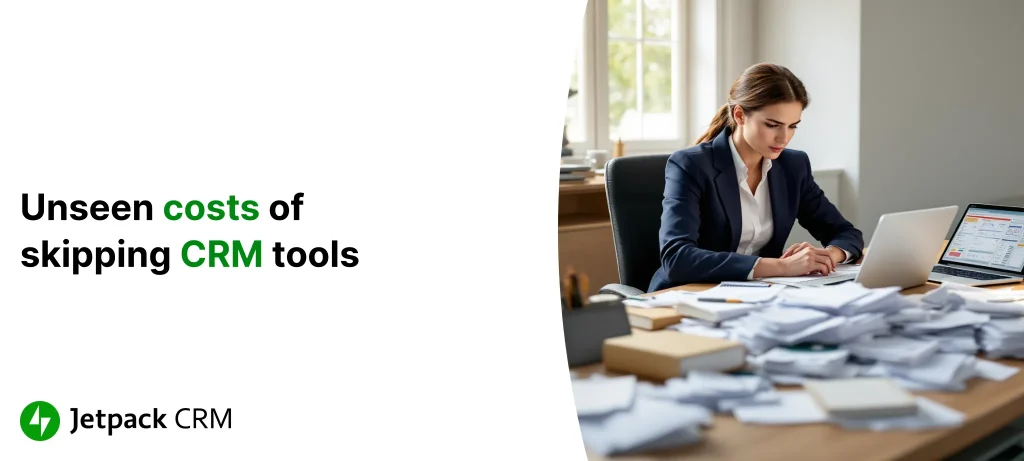
The Hidden Costs of Not Using a CRM: Missed Opportunities and Revenue Loss
Published on January 31, 2026
If you’re running a small business without a dedicated Customer Relationship Management (CRM) system, you probably know the chaos that comes with tracking dozens of customer conversations, scattered notes, and reminders scribbled on sticky notes. Important follow-ups are easy to miss, and leads can slip through the cracks — all of which add up to lost revenue and frustrating workdays. Many business owners convince themselves spreadsheets will do the trick, but in practice, it’s a recipe for wasted time and costly errors.
Picture this: You’re trying to remember an important client call from last week, but the details are lost in a maze of emails, texts, and paper notes. Without a central hub for all this information, it’s impossible to keep up — and chances are, your competitors are a step ahead.
The truth is, a CRM isn’t just a fancy tool; it’s the backbone for organized, meaningful customer relationships. Let’s take a closer look at how scattered workflows and manual tracking slowly drain profits, dull customer loyalty, and pile up unnecessary work in a business of any size.
When Sales Opportunities Slip Through the Cracks
How many potential customers have ghosted you simply because you forgot to follow up? Without a CRM, leads fall through the net all the time — not because you didn’t care, but because there’s too much to remember and too little process to rely on.
The numbers don’t lie: studies show nearly 80% of leads are lost due to poor follow-up. If you’re relying on a web of emails and spreadsheets, it’s almost guaranteed that a few good prospects are getting away.
- Maybe a hot lead’s phone number was buried in your inbox.
- Maybe that reminder you set never made it to your calendar.
- Maybe your notes from last week are nowhere to be found.
With a CRM tool inside your WordPress dashboard, every new inquiry gets logged, reminders pop up automatically, and your team (even if that’s just you!) knows exactly who’s waiting to hear back. Systems like Jetpack CRM put all client info in one place so nothing gets missed, and every lead gets the attention they deserve. That means more deals closed, and less money left on the table.
Why Poor Customer Retention Hurts More Than You Think
Winning new customers is hard — and keeping them is even harder if you’re not keeping track. Loyal customers should feel remembered, not like they’re starting from scratch with every interaction. A CRM helps keep those repeat clients engaged by making it easy to remember preferences, important dates, and history.
Every time you forget a client’s birthday, a key milestone, or just that promise to send a follow-up, you chip away at valuable relationships — and invite your clients to try the competition.
When your retention game is strong, revenue gets a boost — some research puts the improvement at up to 40% just by using CRM tools to manage relationships better. Imagine being able to send a “happy anniversary” coupon at just the right time, or reminding a customer about a renewal before they’ve even thought about shopping elsewhere.
If most of your income comes from returning customers, a CRM isn’t optional. It’s the reminder system, notepad, and Rolodex all rolled into one — improving your customer’s experience and your bottom line at the same time.
The Hidden Costs of Running on Manual Processes
Manually copying data between tools, hunting for old emails, re-entering information — these time drains add up faster than you think. Studies show sales teams spend only 28% of their time actually selling; the rest is swallowed by paperwork and admin. For a small business, that’s not just inefficient — it’s risky.
- Information gets lost. Details slip through the gaps.
- Team members make mistakes because they’re juggling too many systems.
- You lose precious hours every week just double-checking your own work.
When you use a CRM within your WordPress site, everything — customer info, notes, email chains, sales statuses — comes together in one place. With less busywork, you or your team can spend more time actually growing the business.
On top of saving time, centralized data makes it easier to protect privacy and stay on top of compliance (always a relief when regulations change). Simple automation — like automatically logging any contact form submission — frees you up to focus on the conversations that really matter.
How Jetpack CRM Helps You Avoid All That Chaos
Tools like Jetpack CRM are built for small businesses that want to stop letting things fall through the cracks. Its automation handles reminders, routine tasks, and keeps a neat record of everything from first contact to final sale, right within your WordPress dashboard.
Picture this: no more wondering if you followed up, no more searching for that customer’s most recent order. Automated cues and structured pipelines mean less manual tracking and more actual conversations with your contacts.
You don’t have to spend hours setting it up, either. Jetpack CRM consolidates customer data, automates those nerve-wracking “did I remember to…?” tasks, and reduces your risk of missing out because of plain old human error.
Real Small Business Wins: Stories from the Field
It’s one thing to talk about the theory. But here’s what it looks like in practice:
“Our efficiency soared and we recovered leads that were once forgotten. The centralized database allowed us to reach customers in a more personalized and timely manner.”
This retailer went from missing out on re-orders to nurturing customer loyalty in just a few weeks with Jetpack CRM. A local service provider dramatically cut down on admin time while tracking follow-ups effortlessly — which meant less time on paperwork, more time with clients.
If you’re tired of losing track of who needs a call-back, or which customers are at risk of churning, these kinds of systems are the difference between reactive scrambling and proactive growth.
Getting Started: Practical Steps for Seamless CRM Setup
Setting up Jetpack CRM doesn’t require an IT team or months of planning. Here’s a straightforward path to hit the ground running:
- Map out your gaps: Identify where follow-ups and customer details are slipping through the cracks.
- Centralize your data: Import existing contacts into Jetpack CRM so you start from a single, reliable source of truth.
- Learn the basics: Spend a little time getting to know the dashboard — the payoff in accuracy and saved time is instant.
- Turn on automation: Set up reminders and automated emails so your best customers never get forgotten, even during your busiest weeks.
Need more tips on kicking off? The post Using CRM to Navigate the Sales Funnel: A Guide for Small Businesses breaks down actionable ways to tailor your CRM to the quirks and strengths of your business, so you can start seeing results right away.
What to Fix First, and Why It’s Worth It
The real, hidden costs of skipping a CRM aren’t just a few lost leads here and there. It’s the lost sales, forgotten customers, and endless admin that creep up month after month, quietly holding back your growth.
By switching to even a basic CRM system — especially one built for WordPress, like Jetpack CRM — you’re laying the foundation for healthier sales, stronger customer loyalty, and a heck of a lot less stress.
Your time is too valuable to spend piecing together lost details and chasing ghosts. Streamline the chaos, and make every customer count.
If you’re ready to trade guesswork for growth, check out The Hidden Costs of Not Using a CRM for Your Small Business for the full rundown — and start building the kind of system your future self will thank you for.

 airline